Tried Gabapentin for Neuropathy?
Here’s Why It Didn’t Work.
If you’re reading this, there’s a good chance you’ve already done everything you were told to do.
You went to your doctor.
You followed instructions.
You took the medication.
You waited patiently.
And yet…
The burning, tingling, numbness, or stabbing pain in your feet or hands is still there.
Maybe it’s worse at night.
Maybe it keeps you from walking, driving, sleeping, or feeling steady on your feet.
Maybe it feels like you’re wearing invisible gloves or socks that never come off.
And at some point, someone handed you Gabapentin and said:
“This should help.”
But it didn’t.
Or it helped a little — at first — then stopped.
Or it helped the pain but left you foggy, dizzy, tired, or disconnected from yourself.
If that sounds familiar, let me tell you something important:
- You are not broken.
- You are not imagining this.
- And you did not fail treatment.
In fact, what you’re experiencing is extremely common — and it has a logical explanation.
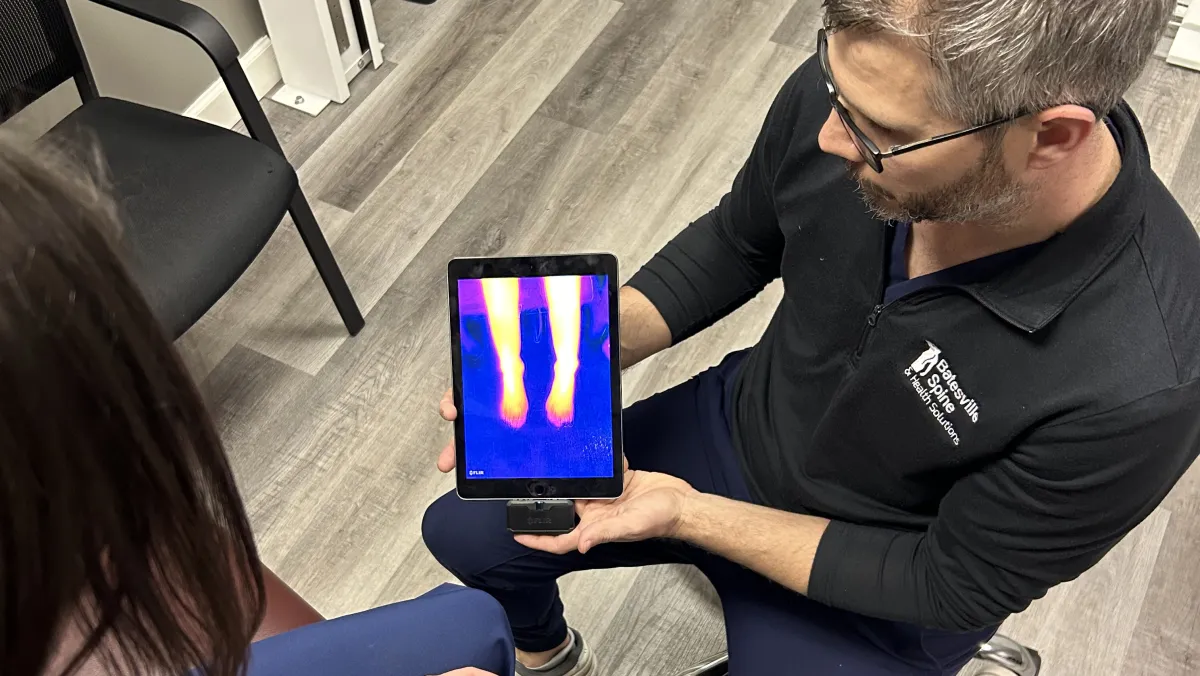
Why Neuropathy Pain Persists — Even After “Doing Everything Right”
Most people with peripheral neuropathy believe the problem is pain.
So naturally, most treatments focus on reducing pain signals.
That’s why medications like Gabapentin, Lyrica, and similar drugs are so commonly prescribed.
They’re designed to dampen nerve signals so the brain doesn’t feel them as intensely.
But here’s the uncomfortable truth most patients are never told:
- Neuropathy is not a pain problem.
- It’s a nerve damage and nerve communication problem.
Pain is just the alarm.
Turning down the alarm does nothing to fix the wiring.
And in many cases, suppressing nerve signals can actually delay real healing — because the underlying nerve dysfunction is never addressed.
This is why so many people say things like:
“The medication took the edge off, but the numbness never improved.”
“My pain changed, but my balance got worse.”
“I feel less pain, but my feet feel more dead.”
“I’m on higher and higher doses, and it still isn’t fixing anything.”
This isn’t your fault.
It’s the result of a system that was never designed to restore nerve function — only to manage symptoms.
Because this approach focuses on nerve function rather than symptom suppression, some components of care may involve an out-of-pocket investment.
The Missing Conversation About Neuropathy
Here’s what rarely gets explained clearly:
Peripheral neuropathy develops when nerves are injured, undernourished, compressed, inflamed, or deprived of proper signaling and blood flow over time.
That damage doesn’t magically reverse just because pain signals are muted.
Think of it like this:
If the wiring in your home is damaged and flickering, taking out the lightbulb doesn’t fix the wiring.
It just makes the room darker.
Yet that’s essentially what many neuropathy treatments do.
They focus on how you feel — not on how your nerves are functioning.
So the real question becomes:
What if neuropathy care focused on resetting nerve communication, instead of suppressing it?
That question is exactly why we developed what we call the Neuropathy Reset Method™.
Introducing the Neuropathy Reset Method™
The Neuropathy Reset Method™ is a structured, clinical approach designed to help the body re-establish healthier nerve signaling, circulation, and function — instead of simply masking pain.
It was created for people who:
Have peripheral neuropathy in the feet, legs, hands, or arms
Have tried medications (especially Gabapentin) with little or no lasting relief
Want a non-drug, non-surgical approach
Are frustrated, skeptical, but still hopeful
Want to understand why nothing has worked — not just try another thing
This is not a pill.
This is not a miracle cure.
And it is not a one-size-fits-all treatment.
Instead, it is a process.
A process built around how nerves actually heal, adapt, and re-learn proper communication when given the right environment and stimulation.
Why “Resetting” Matters More Than “Reducing Pain”
Your nervous system is not static.
Nerves are living tissue.
They adapt to input.
They change based on signals, blood flow, movement, and metabolic support.
In neuropathy, nerves often become:
Under-stimulated in some areas
Over-firing in others
Poorly coordinated
Disconnected from normal feedback loops
This creates the strange mix of symptoms people describe as:
Burning and numbness
Pain and loss of sensation
Hypersensitivity and weakness
Simply dulling those signals does not teach the nervous system how to function normally again.
The Neuropathy Reset Method™ is built around the idea that damaged or dysfunctional nerves must be:
Properly evaluated
Correctly stimulated
Supported metabolically and mechanically
Re-trained to communicate more normally over time
That’s what “resetting” means in this context.
Why This Approach Is Different From What You’ve Tried
Most neuropathy patients come to us saying some version of:
“I’ve already tried everything.”
And often, they have.
They’ve tried:
Medications
Supplements
Injections
Physical therapy
Home remedies
Waiting it out
What they usually haven’t tried is a coordinated nerve-focused protocol designed around how their specific nervous system is behaving.
The Neuropathy Reset Method™ does not assume:
All neuropathy is the same
All nerves need the same treatment
All patients should respond the same way
Instead, it starts with determining:
How well your nerves are communicating
Where breakdowns are occurring
What type of stimulation your nervous system responds to
Whether your body shows signs that it can respond to a reset-based approach
This is why eligibility matters.
Not Everyone Is a Candidate — And That’s Intentional
One of the biggest mistakes in neuropathy care is pretending that every patient will respond to every treatment.
That’s simply not true.
Some people are early enough in the neuropathy process that nerves are more adaptable.
Others have more advanced damage that requires a different strategy.
Some have contributing factors that must be addressed first.
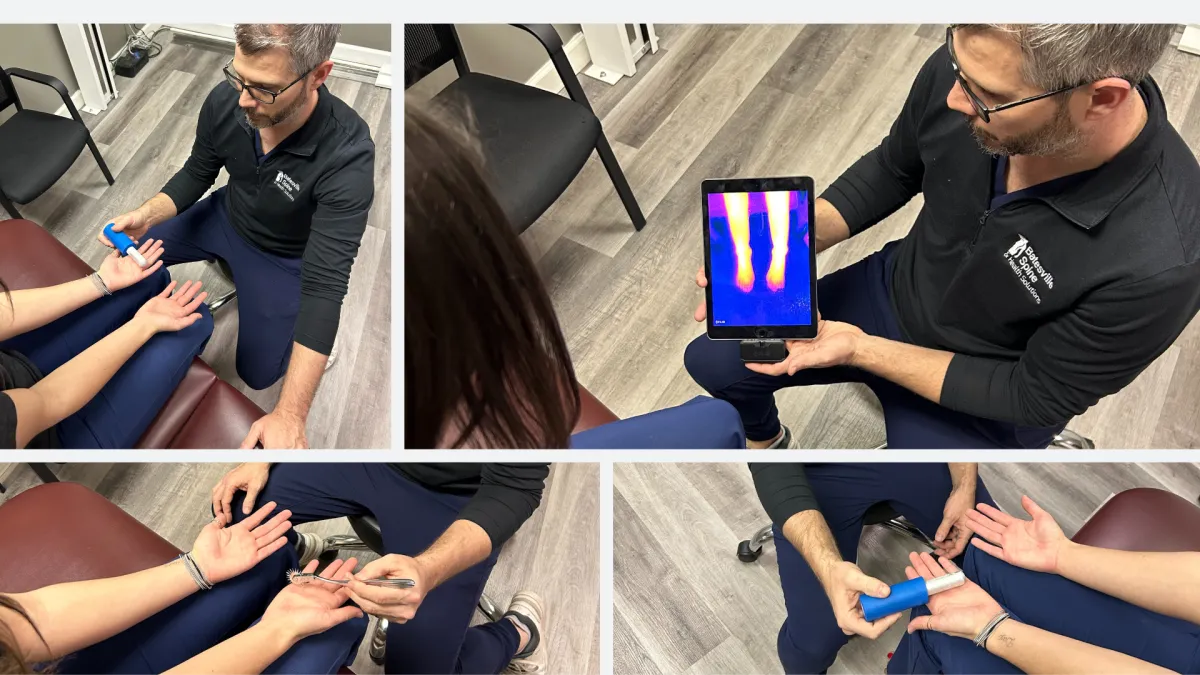
That’s why we do Neuropathy Reset Eligibility Assessments.
Not to sell you something — but to determine whether this approach makes sense for you.
If it doesn’t, you should know that upfront.
What Patients Often Notice When the Reset Process Begins
Every patient is different.
No ethical provider should promise specific outcomes.
That said, patients who respond well to reset-based care often report things like:
Changes in sensation (less deadness, more awareness)
Reduced intensity or frequency of burning or tingling
Improved balance or confidence while walking
Better sleep due to fewer nighttime symptoms
Feeling more “connected” to their feet or hands
These changes don’t always happen overnight.
Nerves heal and adapt gradually, not instantly.
But for people who have felt completely stuck, even small improvements can be meaningful — because they signal that the nervous system is capable of change.
Why Many People Feel Hope — and Caution — at the Same Time
If you’ve been dealing with neuropathy for a while, you may feel two competing emotions right now:
Hope — because this finally sounds different
Skepticism — because you’ve been disappointed before
That’s normal.
In fact, skepticism is healthy.
You shouldn’t believe in something just because it sounds good.
You should understand:
Why it’s different
How it works
Whether it applies to your situation
That’s exactly what the eligibility assessment is designed to do.
No pressure.
No commitment required.
Just clarity.
What This Is — and What It Is Not
To be clear:
The Neuropathy Reset Method™ is not:
A replacement for emergency medical care
A promise to “cure” neuropathy
A medication
A generic supplement protocol
It is:
A nerve-focused, function-based approach
Built around evaluation, stimulation, and adaptation
Designed for people who want answers, not just prescriptions
Intended to work with your body, not override it
Why Waiting Rarely Helps Neuropathy
One final thing that’s important to understand:
Neuropathy rarely improves by doing nothing.
In many cases, nerves that are not properly stimulated or supported can become less responsive over time.
That doesn’t mean you’re out of options.
But it does mean that early action often creates more opportunity than waiting until symptoms are severe.
If you’ve already tried medications and you’re still struggling, continuing down the same path usually leads to more of the same.
Different outcome → different approach.
Your Next Step: Neuropathy Reset Eligibility Assessment
If you’re still reading, it means something here resonated.
The next logical step is not to “sign up” or “commit.”
It’s simply to determine whether the Neuropathy Reset Method™ is appropriate for you.
That’s why we offer a Neuropathy Reset Eligibility Assessment.
During this process, we evaluate:
Your symptoms
Your history
Your response to prior treatments
Whether your nervous system shows signs that it can respond to a reset-based approach
If it makes sense to move forward, you’ll know why.
If it doesn’t, you’ll know that too.
Either way, you’ll leave with more understanding than you had before.
Final Thought
Living with neuropathy is exhausting — physically and emotionally.
Being told to “just manage it” can feel defeating.
But management is not the same as restoration.
And for the right patient, a reset-focused approach can open a door that medication alone never did.
👉 Ready to See If You’re Eligible?
Take our short Neuropathy Reset Eligibility Assessment to see if this approach makes sense for you.